

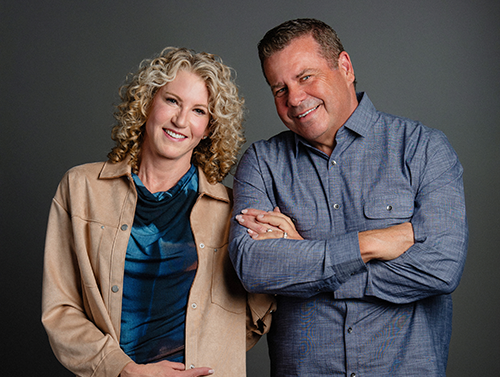

Yes, a marriage can survive infidelity and even repeated betrayal—but it cannot survive it cheaply, casually, or without deep, costly change in both spouses and a genuine work of God in the heart. Whether it should survive in a particular situation depends on repentance, safety, and the leading of the Holy Spirit.
Quick Answer
A marriage scarred by infidelity and repeated betrayal is not automatically doomed, but it will never drift into healing on its own. Survival requires brutal honesty, full disclosure, true repentance, consistent new behavior over time, and a supernatural kind of forgiveness rooted in Christ, not willpower. Even then, the betrayed spouse is not obligated to stay, but both are invited into a redemption story where God can make something new out of what’s been shattered.
“Our story shows that any marriage is salvageable—but not every marriage will be salvaged.”
1. What the Numbers Say—and Why They Don’t Tell the Whole Story
Therapists who track this stuff will tell you something surprising: most couples don’t immediately divorce after an affair. Depending on the study, a majority of couples initially stay together after infidelity, especially if they seek some form of help. But if you zoom out a few years and ask, “Are they still together, and are they actually doing well?” the picture changes.
Some research suggests only a minority of couples reach real, mutual healing and satisfaction after an affair. Where the betrayer hides, minimizes, or denies, the long‑term survival rate of the marriage crashes.
So yes, marriages often continue after betrayal—but fewer marriages actually heal.
“Staying married and being healed are not the same thing.”
From where I stand, I’d say it this way: statistics can tell you what’s common, but they can’t touch what’s possible when God steps into a surrendered heart. “With man this is impossible, but with God all things are possible” (Matthew 19:26).
2. What We Lived: Repeated Betrayal, Not Just a Bad Weekend
Our story wasn’t “one affair and then everything got better.” It was years of cycles—confession, chaos, short‑term change, then right back to old patterns.
-
Kath drifted into affairs when she felt controlled, unseen, and emotionally alone, telling herself each time, “This will fill the void.”
-
I hid a long string of unfaithfulness behind my control and religiosity, convinced some things I would “take to my grave.”
We tried:
-
Changing jobs
-
Moving cities
-
Going to counseling “to fix her”
-
Drinking more to numb the shame
-
Promising to do better next time
None of that touched the root. The turning point wasn’t one more promise; it was:
-
Full truth finally brought into the light—all of it, not just what we got caught for.
-
Hitting a wall where my anxiety, addiction, and double life finally broke me to my knees before God.
-
Jesus becoming Lord, not an accessory—we moved from “church as a tool to fix our marriage” to surrendering our lives and marriage to Him.
“Telling the truth—getting matters out in the open—gives marriages more of a chance for restoration than not.”
Scripture says, “You will know the truth, and the truth will set you free” (John 8:32). That includes the ugly truth we’d rather bury.
3. The Non‑Negotiables if a Marriage Is Going to Survive
If you’re talking about repeated betrayal, the bar has to be higher than, “I’m sorry; it won’t happen again.” Here are the non‑negotiables I’ve seen—in our story, in retreat couples, and in wise, experience‑based affair‑recovery work.
For the One Who Betrayed
There has to be:
-
Complete disclosure and radical honesty
No more half‑truths. No more “need‑to‑know.” Everything on the table, even at the risk of losing the marriage.Pull quote: “There won’t be true healing in you or between the two of you until you tell.”
-
Cutting off all contact with affair partners
Phone, social, email, secret accounts—gone. Checked, monitored if needed. This is both biblical repentance and basic recovery wisdom. -
Owning the harm without defending yourself
No blame‑shifting, no “if you hadn’t,” no “it was just emotional.” Full responsibility, repeatedly, while your spouse cycles through anger, grief, and triggers. -
Submitting to outside help and accountability
Serious counseling, discipleship, same‑gender accountability, and local church support—not just a couple of sessions to calm the storm. -
Long‑term, consistent change
New patterns around honesty, technology, friendships with the opposite sex, substances, spiritual life, and anger—demonstrated over months and years.
This is what Scripture calls repentance—not just sorrow, but turning: “Bear fruit in keeping with repentance” (Matthew 3:8).
For the One Who’s Been Betrayed
You are not called to pretend this isn’t a big deal. Adultery is covenant‑shattering. Jesus Himself names it as legitimate grounds for divorce (Matthew 19:9). You’re also invited into something supernatural:
-
Permission to have boundaries
Separation for safety or sanity, conditions for staying, requirements for counseling and transparency—these are not unspiritual; they’re wise. -
Permission to grieve and be angry
Affair trauma is real. You will likely cycle through shock, rage, numbness, and deep sadness many times. You are not “failing as a Christian” when that happens. -
Invitation to forgive, even if you don’t yet know whether you’ll stay
Forgiveness and reconciliation are related but not identical. God commands forgiveness—“forgiving one another, as God in Christ forgave you” (Ephesians 4:32)—but He does not command you to enable continued sin.“Forgiveness doesn’t mean you must stay in the marriage. It frees you, regardless of what they do.”
4. When It’s Repeated: Is There a Point Where You’re Free to Walk?
This is where the question cuts close.
With repeated betrayal, the issue isn’t just what happened; it’s what’s still happening in the heart.
From a biblical and pastoral standpoint:
-
Adultery does give you the freedom to divorce. Jesus was clear on that (Matthew 19:9).
-
If the betrayer is unrepentant, still lying, still hiding, still blaming, or continuing in sexual sin, staying can become participation in the lie—not faithfulness.
-
If there is any abuse (emotional, spiritual, financial, physical, sexual), your first call is to safety and truth, not to keeping up appearances.
What I tell couples at our retreats is simple and hard:
“God can redeem any marriage; He does not require you to endure any behavior.”
Sometimes, God gets glory in a story like ours—radical repentance, radical forgiveness, a “new creation” marriage (2 Corinthians 5:17). Sometimes, He gets glory in rescuing the betrayed from ongoing bondage and walking with them as they rebuild a life in Him.
Either way, His heart is not that you be destroyed.
5. If You’re Standing in the Rubble Right Now
If you’re asking this because you’re in the middle of it—or afraid you might be—here are some first steps that are both practical and spiritual.
-
Tell the truth somewhere safe.
-
Confide in one wise, godly person who is for your marriage but not afraid of hard truth—a pastor, counselor, or seasoned Christian couple.
-
If there’s danger or coercion, loop in professional help and, if needed, law enforcement.
-
-
Get professional, faith‑honoring counseling.
-
Not just “marriage light,” but someone experienced in affair recovery and trauma.
-
Individual counseling for both of you plus couples work is often necessary.
-
-
Slow down big decisions.
-
After discovery, everything in you will want to either bolt or cling. If safety allows, give yourself time to see if there is real repentance or just damage control.
-
-
Lean into God, not just tools.
-
Get back into Scripture together and alone. Passages like Psalm 34, Romans 8, and the Gospels will feed your soul when nothing makes sense.
-
Pray the simplest prayer I learned on my face: “Jesus, I can’t. You have to.”
“The steadfast love of the Lord never ceases … great is your faithfulness” (Lamentations 3:22–23).
“Every problem has a solution, so it’s important to choose not to give up hope.”
-
6. What God Can Do—Not Just in a Marriage, but in You
The question behind your question might be: “Is there any hope for me, even if my marriage doesn’t make it?”
The answer is yes.
In our story, before God redeemed our marriage, He had to rescue us—from addiction, control, shame, and lies we’d carried since childhood. That’s the work He loves to do.
-
He offers you a new identity not defined by “betrayer” or “betrayed,” but by “beloved son/daughter.” “For God did not send his Son into the world to condemn the world, but to save the world through Him” (John 3:17).
-
He offers forgiveness big enough for both the one who cheated and the one who can’t stop replaying it. “There is now no condemnation for those who are in Christ Jesus” (Romans 8:1).
-
He promises His presence in the middle of the wreckage. “The Lord is close to the brokenhearted and saves those who are crushed in spirit” (Psalm 34:18).
“He has cleansed us from the guilt and shame we could be carrying. Instead, we live in freedom from those burdens.”